Two of Long Beach’s most interesting and most underrated condo neighborhoods sit just a short distance apart, yet they offer completely different lifestyles. East Village Arts District and Rose Park each have their own identity, their own price dynamics, and their own buyer profile.
This guide walks through both neighborhoods side by side: location, lifestyle, pricing, building types, and investment potential, so you can make a more informed decision about where you want to be.
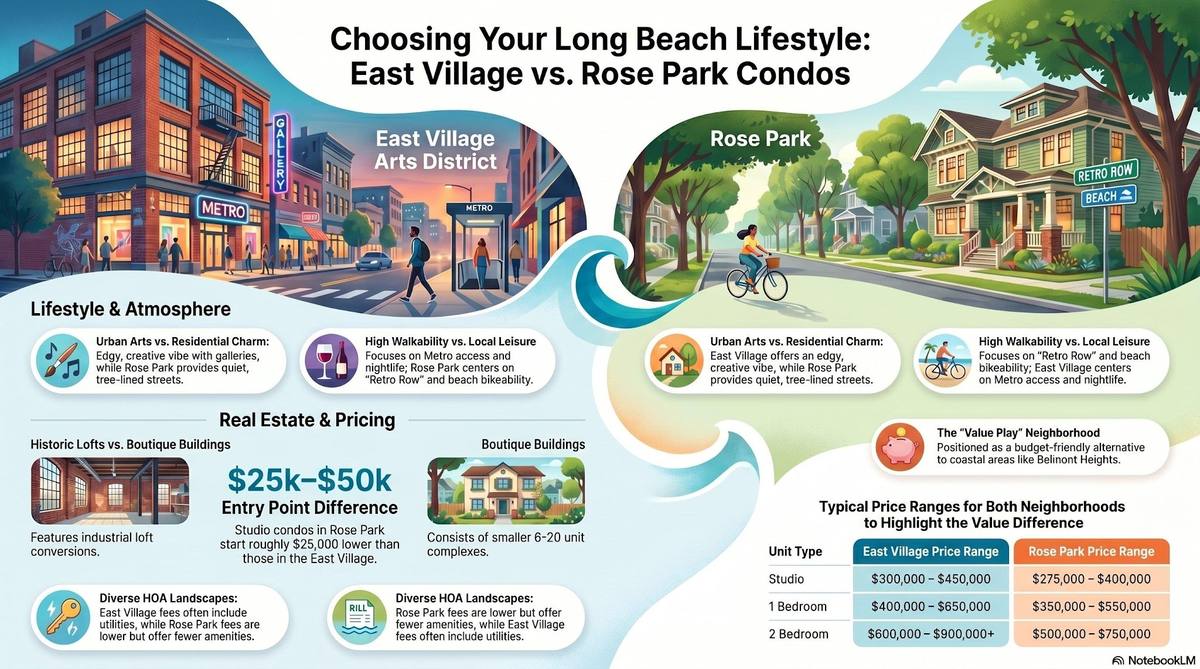
The Neighborhoods at a Glance
East Village Arts District
East Village is Downtown Long Beach’s creative hub, a neighborhood where converted lofts and historic buildings sit alongside galleries, murals, coffee shops, and the Metro A Line. It’s one of the most walkable areas in the city, with Pine Avenue, the waterfront, and transit all within reach.
For buyers who want to feel plugged in to the city’s arts scene, its dining, its transit network, and its energy, East Village is difficult to beat.
Explore our dedicated guide: East Village Arts District Condos in Long Beach.
Rose Park
Rose Park sits just east of Downtown, tucked between Cherry and Redondo Avenues, with Ocean Boulevard to the south and 7th Street to the north. It’s a quieter, more residential neighborhood with tree-lined blocks, smaller condo buildings, and a local character anchored by Retro Row on 4th Street.
The neighborhood feels distinctly different from its neighbors. Tree-lined streets, 1950s and 1960s architecture, and a lower density give it a calm, community feel that appeals to a different kind of buyer.
Explore our dedicated guide: Rose Park Condos in Long Beach.
Full Neighborhood Comparison
The table below covers the key dimensions that matter most to condo buyers in Long Beach, from pricing and walkability to parking and investment outlook.
| Category | East Village Arts District | Rose Park |
| Location | East of Downtown; between 1st & 7th Streets near Long Beach Blvd | South of 7th St, North of Ocean Blvd, between Cherry & Redondo Ave |
| Vibe & Atmosphere | Urban, edgy, creative: galleries, murals, Metro access | Quiet, residential, historic charm: tree-lined streets, local feel |
| Building Style | Industrial loft conversions, historic buildings, mixed-use | Boutique 6-20 unit buildings, 1950s-70s construction |
| Studio Price Range | $300,000 – $450,000 | $275,000 – $400,000 |
| 1 Bedroom Price Range | $400,000 – $650,000 | $350,000 – $550,000 |
| 2 Bedroom Price Range | $600,000 – $900,000+ | $500,000 – $750,000 |
| Entry Point Advantage | Higher: urban premium for loft-style living | ~$25,000-$50,000 lower than East Village for comparable units |
| Typical HOA Fees | $350-$600/month; often includes utilities in loft buildings | $250-$500/month; simpler buildings, fewer amenities |
| Walkability | High: walkable to Downtown, Pine Ave, Metro A Line | Good: walkable to Retro Row (4th St), quick bike ride to beach |
| Beach Proximity | ~10 min drive or Metro ride to beach | ~5-8 min bike ride or short drive to Alamitos Beach |
| Public Transit | Excellent: Metro A Line station, bus connections | Limited: primarily car or bike dependent |
| Parking | Challenging: street parking limited; some buildings have no parking | Variable: some units include garage/assigned; street parking easier |
| Nightlife & Dining | On your doorstep: galleries, bars, restaurants, Pine Ave nightlife | Retro Row nearby; quieter local scene with cafes and wine bars |
| Investment Outlook | Established arts/urban district; strong renter demand | Value play: central location, lower entry, upside potential |
| Best For | Urban creatives, young professionals, transit-dependent buyers | First-time buyers, value seekers, beach proximity with quiet living |
Pricing: How Far Does Your Budget Go?
One of the clearest differences between these two neighborhoods is the entry price. Rose Park consistently comes in $25,000 to $50,000 lower than East Village for comparable units, making it the more accessible option for buyers working with a tighter budget.
| Unit Type | East Village Arts District | Rose Park |
| Studio | $300,000 – $450,000 | $275,000 – $400,000 |
| 1 Bedroom | $400,000 – $650,000 | $350,000 – $550,000 |
| 2 Bedroom | $600,000 – $900,000+ | $500,000 – $750,000 |
| Entry Point Difference | Higher: urban loft premium | ~$25,000-$50,000 lower than East Village |
| Typical HOA | $350 – $600/month | $250 – $500/month |
Source: Representative price ranges based on active market data and neighborhood guides. Actual prices vary by building, condition, and market timing.
For context: Rose Park’s lower prices don’t reflect lower desirability. They reflect the fact that the buildings are smaller, older, and less amenity-heavy than the loft conversions and historic landmark buildings that define East Village.
Lifestyle: Day-to-Day Living in Each Neighborhood
East Village: The Urban Arts Life
Living in East Village means you’re embedded in the city’s creative pulse. On any given day you might walk past a new mural on your way to a gallery opening, grab coffee from a neighborhood roaster, and hop the Metro to LA without touching your car. The neighborhood has a genuine urban energy that’s hard to replicate.
It’s also a neighborhood that doesn’t quiet down much. If you enjoy the ambient energy of an active urban district, that’s a feature. If you need calm and quiet, it may not be the right fit.
Parking is the most consistent pain point for East Village residents, as many buildings offer limited or no dedicated parking and street parking is competitive.
Rose Park: The Residential Sweet Spot
Rose Park feels like what Long Beach was before it became a destination. Tree-lined blocks, neighbors who know each other, and a pace that doesn’t rush. It’s residential in the best sense, with enough proximity to everything to never feel isolated.
Retro Row on 4th Street is the neighborhood’s lifestyle anchor: independent coffee shops, wine bars, vintage stores, and a beloved art house theater, all within walking or biking distance.
Parking is generally easier in Rose Park than in East Village, with many units offering assigned or garage parking.
Building Types: What You’re Actually Buying
East Village: Loft Character, Mixed-Use Energy
East Village is known for its converted industrial lofts: high ceilings, exposed ductwork, large windows, and open floor plans that you simply won’t find in newer construction. Historic buildings like The Cooper Arms and Lafayette Building offer a different kind of character, with ornate lobbies and architectural detail that dates back to the early 20th century.
Because many buildings are conversions of older commercial or industrial structures, buyers should pay close attention. Older buildings can mean deferred maintenance, complicated HOA financials, or special assessments. Due diligence matters here more than in a newer development.
Rose Park: Boutique Residential Scale
Rose Park is defined by small condo buildings, typically 6 to 20 units, built between the 1950s and 1970s. These aren’t loft conversions or historic landmarks. They’re modest, well-located residential buildings with a neighborhood character that larger complexes can’t replicate.
Smaller buildings mean smaller HOA budgets, which can mean lower fees, but also requires a more careful review of reserve funds and maintenance history. A self-managed 8-unit building can be a great investment or a headache, and the difference often comes down to the HOA’s financial health.
Investment Outlook: Which Neighborhood Has More Upside?
Both neighborhoods offer genuine long-term investment cases, but from different positions.
East Village is an established destination. The arts district designation, Metro access, and proximity to Downtown have been priced in for years. Appreciation has been steady, and demand from renters, especially young professionals and creatives, remains strong. The upside is more incremental, but also more predictable.
Rose Park is still being discovered. Its central location, bordered by Downtown, Belmont Heights, and Alamitos Beach, is objectively strong, but it hasn’t fully reflected in pricing yet. For investors willing to look past the lack of marquee recognition, the value play is compelling.
Both neighborhoods attract strong rental demand, which matters for investors. East Village commands premium rents from renters who want urban walkability. Rose Park attracts renters who want a quieter lifestyle near the beach without paying beachfront prices.
Which Neighborhood Is Right for You?
Use this quick-reference guide to identify which neighborhood aligns with your priorities:
| Choose East Village Arts District If… | Choose Rose Park If… |
| You want an urban, walkable lifestyle | You prefer a quieter, residential neighborhood |
| You love arts, galleries, and creative energy | You want the best value per dollar near the beach |
| You rely on public transit (Metro A Line nearby) | You want to bike to the beach and Retro Row |
| You want loft-style industrial character | You appreciate historic charm and boutique buildings |
| You want nightlife and dining steps from your door | You want neighborhood calm without sacrificing location |
| Parking is not your top priority | Parking availability matters to you |
| You’re comfortable paying an urban premium | You’re a first-time buyer or budget-conscious investor |
The honest answer: there isn’t a wrong choice between these two neighborhoods for the right buyer. East Village and Rose Park attract different people for genuinely different reasons, and understanding which lifestyle fits your day-to-day is the most important factor in making the right decision.
How These Neighborhoods Fit Into the Broader Long Beach Condo Market
East Village and Rose Park are two of several neighborhoods worth exploring as a Long Beach condo buyer. Others include:
- Alamitos Beach Condos: Direct beach access and a mix of historic and contemporary buildings
- Belmont Heights Condos: More polished and established; higher price points but strong resale demand
- Bluff Park Condos: Elevated ocean views above Alamitos Beach; quiet residential character
- Downtown Long Beach Condos: High-rise waterfront living with harbor views and maximum urban walkability
- Belmont Shore Condos: Beach village lifestyle, 2nd Street dining, marina proximity
For a comprehensive overview of the entire Long Beach condo landscape: Long Beach Condos for Sale: Complete Guide.
Common Questions: East Village vs. Rose Park Condos
Which neighborhood is more affordable?
Rose Park is consistently more affordable, with entry prices running roughly $25,000 to $50,000 lower than comparable East Village units. HOA fees also tend to be lower in Rose Park given the smaller, simpler building structures.
Which neighborhood is closer to the beach?
Rose Park has the edge on beach proximity. It sits just south of 7th Street with Alamitos Beach reachable in a 5 to 8 minute bike ride. East Village is about a 10 minute drive or Metro ride to the waterfront.
Is East Village good for people without a car?
Yes, it’s one of the best car-free neighborhoods in Long Beach. The Metro A Line runs nearby, providing direct access to Downtown LA, and most daily needs are walkable from most buildings.
Which neighborhood is better for first-time buyers?
Both attract first-time buyers, but for different reasons. Rose Park’s lower prices and quieter character tend to appeal to buyers prioritizing value and stability. East Village appeals to first-timers who want an urban lifestyle and are comfortable with older buildings and higher HOA fees.
Are condos in both neighborhoods good rental investments?
Yes, both neighborhoods support strong rental demand. East Village commands premium rents from renters who want walkability and urban character. Rose Park attracts renters looking for a quieter lifestyle near the beach at a more accessible price point.
What are the HOA fees like in each neighborhood?
East Village HOA fees typically run $350 to $600 per month, and often include utilities such as water, gas, and sometimes electricity in the older loft buildings. Rose Park HOA fees tend to range from $250 to $500 per month, covering water, trash, and exterior maintenance in most cases.
Can I use a VA or FHA loan to buy in either neighborhood?
Possibly, but it depends on the specific building rather than the neighborhood. Both East Village and Rose Park have buildings that may or may not meet VA/FHA approval requirements. Your agent and lender should verify eligibility on a building-by-building basis.
Which neighborhood is appreciating faster?
East Village has a strong track record of appreciation driven by its established identity and ongoing Downtown revitalization. Rose Park is earlier in its appreciation cycle, which means more potential upside but also more uncertainty in the near term.
What’s the parking situation in each neighborhood?
Parking is notably different between the two. East Village is the more challenging of the two, as many historic buildings have limited or no dedicated parking and street parking is competitive. Rose Park is more variable, with some units offering garage or assigned parking and street parking generally more available.
How do I decide between the two neighborhoods?
Start with your daily lifestyle, not your investment thesis. If you picture yourself walking to an art opening or hopping the Metro to LA, East Village fits. If you picture yourself biking to the beach on a Saturday morning and grabbing coffee on Retro Row, Rose Park fits. The right neighborhood is the one that matches how you actually want to live.
Related Pages on LovelyLongBeachCondos.com
- East Village Arts District Condos in Long Beach
- Rose Park Condos in Long Beach
- Long Beach Condos for Sale: Complete Guide
- Best Condo Buildings in Long Beach
- Alamitos Beach Condos for Sale
- Belmont Heights Condos
- Downtown Long Beach Condos for Sale
- Complete Guide to Buying a Condo in Long Beach
- Understanding HOA Fees in Long Beach Condos
- Are Long Beach Condos a Good Investment?
Ready to Explore Long Beach Condos?
Whether East Village’s urban energy or Rose Park’s residential charm appeals to you more, the Long Beach condo market has options worth exploring at both ends of the spectrum.
Browse our Long Beach condo listings, explore the neighborhood guides, and reach out when you’re ready to take the next step.